A versatile bench, closing options, strong leaders, and an overall team dynamic that suggests that elusive “next gear”—so long missing—to shift into come playoff time is within reach: it’s all there. And that’s why I’m worried.
The Raptors culture reset has been a success, there’s no denying it. Not just for the team, but for the coaching staff and for Casey, who has, in the past, seemed impervious to self-adjustment. It’s a change that no doubt came about from top-down pressure, initially, and has gradually gelled into an added dimension of coaching that Casey has fluidly stepped into. He seems unhurried to make any set rotations and instead remains open to seeing what would best serve in each game. It’s a hyper-nuanced style of coaching that conversely appears extremely chill, and Casey, along with the team, seems to be enjoying it.
But top-down organizational change, like the way the Raptors culture reset was initiated, only ever really works one way. No matter how good things are going there’s always the potential for another decision to be delivered from up top. We know that Ujiri understood a big change was necessary going into this season, and we can also assume that he trusted Casey and the work he’d done with the team thus far to know that he had it in him to adapt, but what we also know of Ujiri is that he’s a shrewd businessman who is often ten steps ahead. More than that, he’s not the only one making the big organizational decisions.
My concern isn’t with Casey, or Ujiri, who while he is shrewd is also a proven builder given to long-term tinkering that will play out in favour of the team rather than simply burning it down and starting from scratch. My concern comes with the overarching, somewhat antiquated ideals of the parent organization, and the people making the financial decisions for this team. How far up the ladder did the request for a culture reset come down? And like a game of broken telephone, did the communication change along the way?
MLSE, the parent company of the Raptors and basically all Toronto sports, has more often than not been concerned with the numbers when it comes to managing its teams. Sports are a lucrative business and historically the flashiest of its Toronto franchises have been the Leafs. But with the NBA changing, specifically with the focus on Frankenstein’d super teams being the future of the league, I worry that the current appeal of the Raptors bench’s efficiency might come more as something sellable, rather than retainable. Something to trade in exchange for a contract, a big name over what works best for the team.
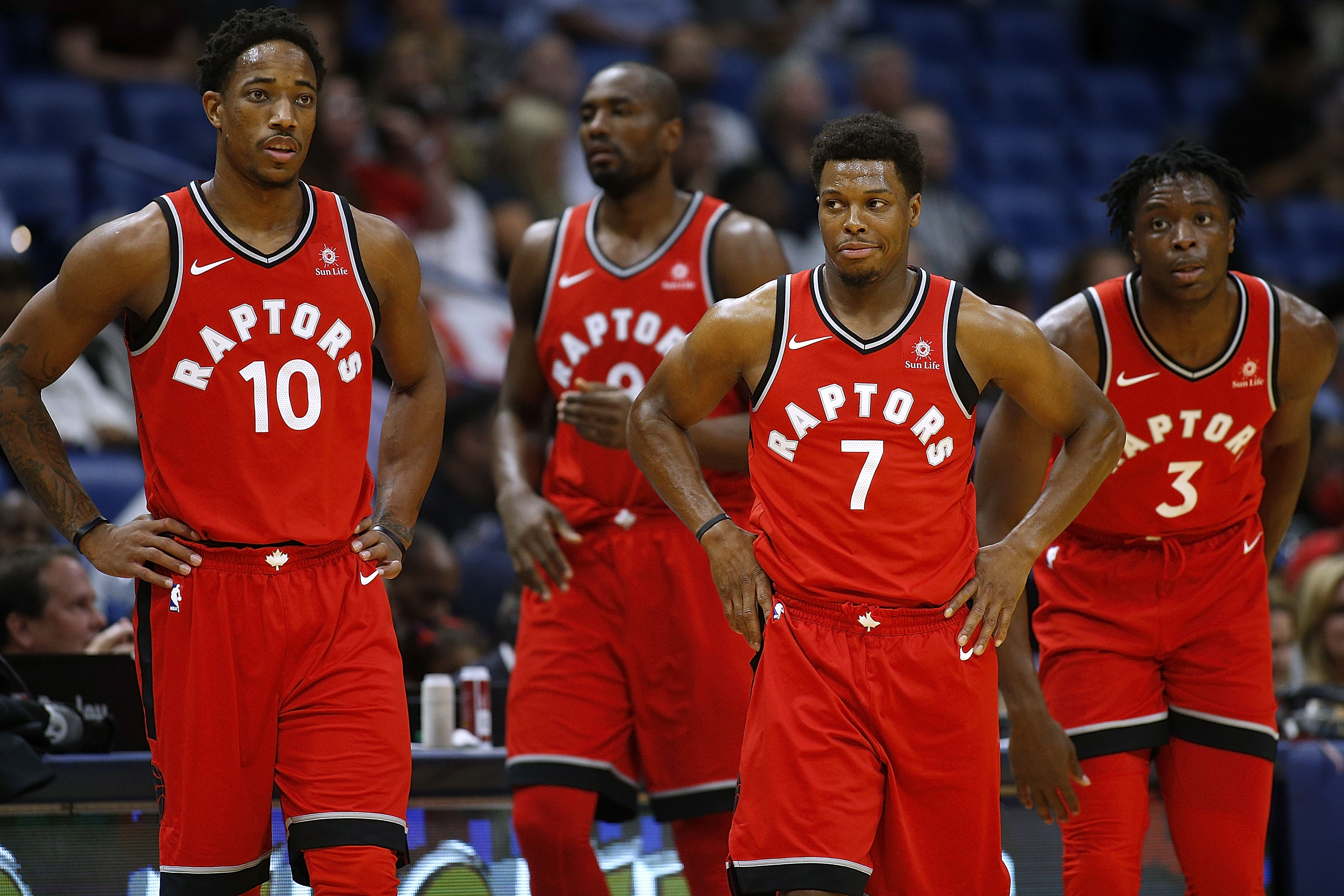
Think of how many ways the bench plus a couple other starting contracts—JV remains at the top of that list—could be parceled up and packaged to a team that’s struggling to get to their next competitive level or bottoming out in the 2nd half of the season. The Raptors right now have this beautiful, very rare excess of talent and versatility that they can kind of throw at anything coming their way. More than that, it’s working for everybody. Lowry has adapted, so seemingly have Ibaka and JV. DeMar is only getting better and Anunoby is thriving under the tutelage of starting with such strong support around him, freeing him up to get flashy in his plays, a place where he excels.
There have been big changes in playmaking and training, certainly, but a big part of this freedom and confidence is coming from the Raptors bench. Imagine putting that on a silver platter, a promise to inject your team with some sorely needed versatility, a solid bench rotation to give your starters a breather. The other way is just blowing the bench up. Every one of them would garner interest from teams in need of what one of these guys could offer. Wright’s defensive length would fit in pretty snugly with the Bucks, VanVleet’s energy and tenacity would be welcome pretty much anywhere with an offensive deficit. Poeltl and Siakam are both capable defenders and quick hands when it comes to rebounds and making the big play, especially Pascal. And Powell, despite his mid-season lag, has proven time and again to be the last chance for the Raptors, even when they’d seemingly run out of last chances.
Are the people holding the purse strings of this organization comfortable with the idea of letting things continue to develop? Do they have the patience and trust to keep giving a relatively young team (this iteration, and the majority mean age of its players) the evolutionary leverage and time they need to get better, to become the next thing rather than going out and grabbing the first big name that become available? Because there’s no doubt, when half your roster is halfway into the best years of their budding careers, that things will continue to change. And with the momentum this Raptors team is moving with there’s not many reasons, even for the pessimistic fan, to think those changes won’t be for the better.
There’s a temptation to hedge your bets when things are going well. I understand the danger of complacency that Ujiri and to some extent, Casey, are faced with without a plan b in place, should the Raptors succumb to the same late-season pitfalls they have in years past. Absolutely those options need to be explored. But it can’t be at the expense of development, or giving an entire organizational reset only one year to take hold.
Best case scenario, the culture change came from—and goes all the way up to—the top, and all of this is just devil’s advocate speculation. Worst case, well, it’s early January and I don’t intend to make the winter bleaker for anybody, so I’ll let you extrapolate from any of these aforementioned depressing options and use your imagination for the rest. Whatever happens, enjoy the almost Galapagoan evolution our little terrible lizards are going through at this stage in the season. The future might yet be unsure but the conditions are ripe right now for this whole thing to keep getting better.