
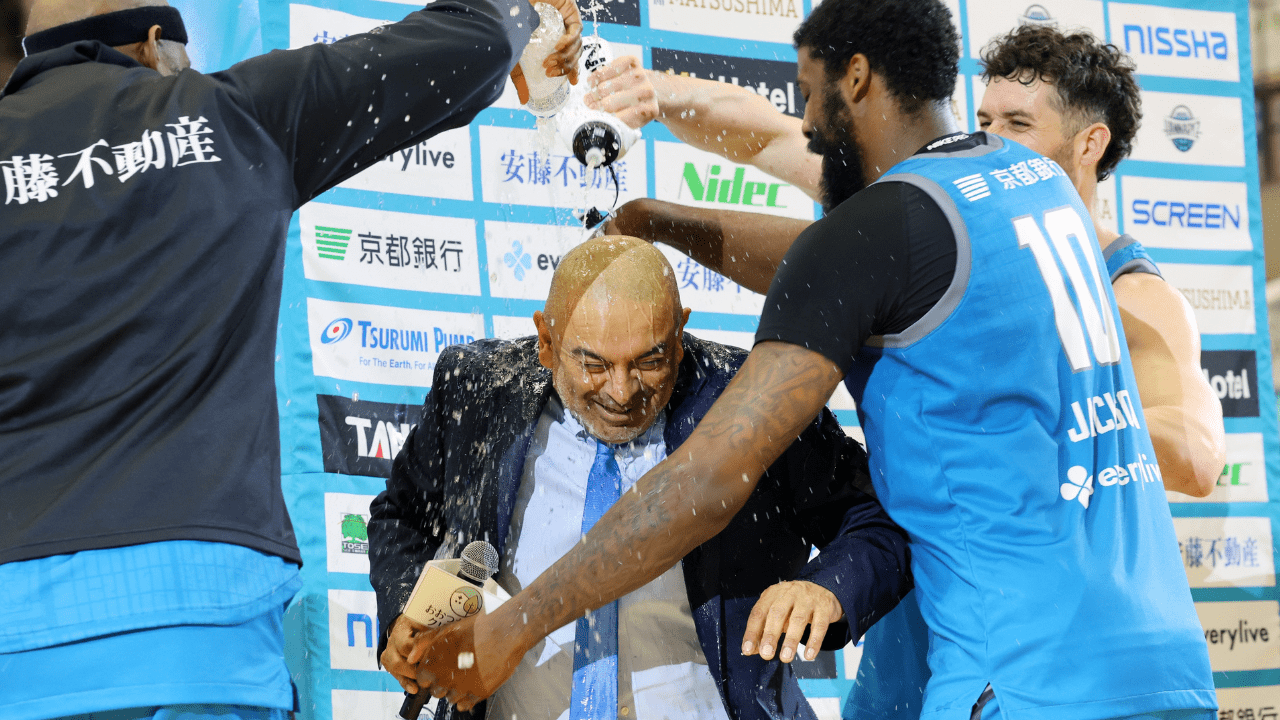
Legendary Canadian coach Roy Rana is already on a new mission to help another team overachieve and change its expectations.
This time, he’s leading the charge for the Jordanian national team in Jeddah, Saudi Arabia at the FIBA Asia Cup. They recently defeated India, but lower-ranked Saudi Arabia pulled an upset over them. This Saturday, Jordan will face its biggest test yet in the group stage against East Asian powerhouse China.
Rana has spent the past three seasons – shorter than a presidential term – raising the standards of a professional Japanese team.
But the world of overseas basketball is the direct opposite of Jeddah’s scorching heat. It is cold and unforgiving. The two parted ways before a measurable metric of success was achieved (like a playoff appearance), but his impact in changing the organization’s expectations and standards should not be forgotten.
“When I started, we were one of the bottom four teams in [B1 – Japan’s top division]. The other three were relegated to second and third division, and we have become a solid program that’s in a playoff hunt and has tons of runway ahead of us for the future,” Rana told me.
He’s not discounting the success of the program. They missed the playoffs by a hair. Only the two best teams from each of the three conferences plus two of the best wildcards make the playoffs.
When Rana stepped into the head coaching role, Kyoto had come off a franchise-worst 14-43 season. The first two seasons were tumultuous – with 22-38 and 17-43 finishes – but building on the continued improvement of two key players from a season before, Kyoto finished with a 33-27 record this past season, good enough for 10th in a league with 24 teams. It was the first time Kyoto surpassed the .500 mark since the 2018-19 season.
Wherever Rana goes, he seems to be able to build an unshakeable resolve that his underdog team can win against the best. (He did it when he led his college program to an impossible upset.) I witnessed this when Kyoto played against one of the league’s Goliaths, Tokyo Alvark – a team sponsored by Toyota, one that flexes its parent company’s muscles by bringing out a 3-point shooting robot during halftime.
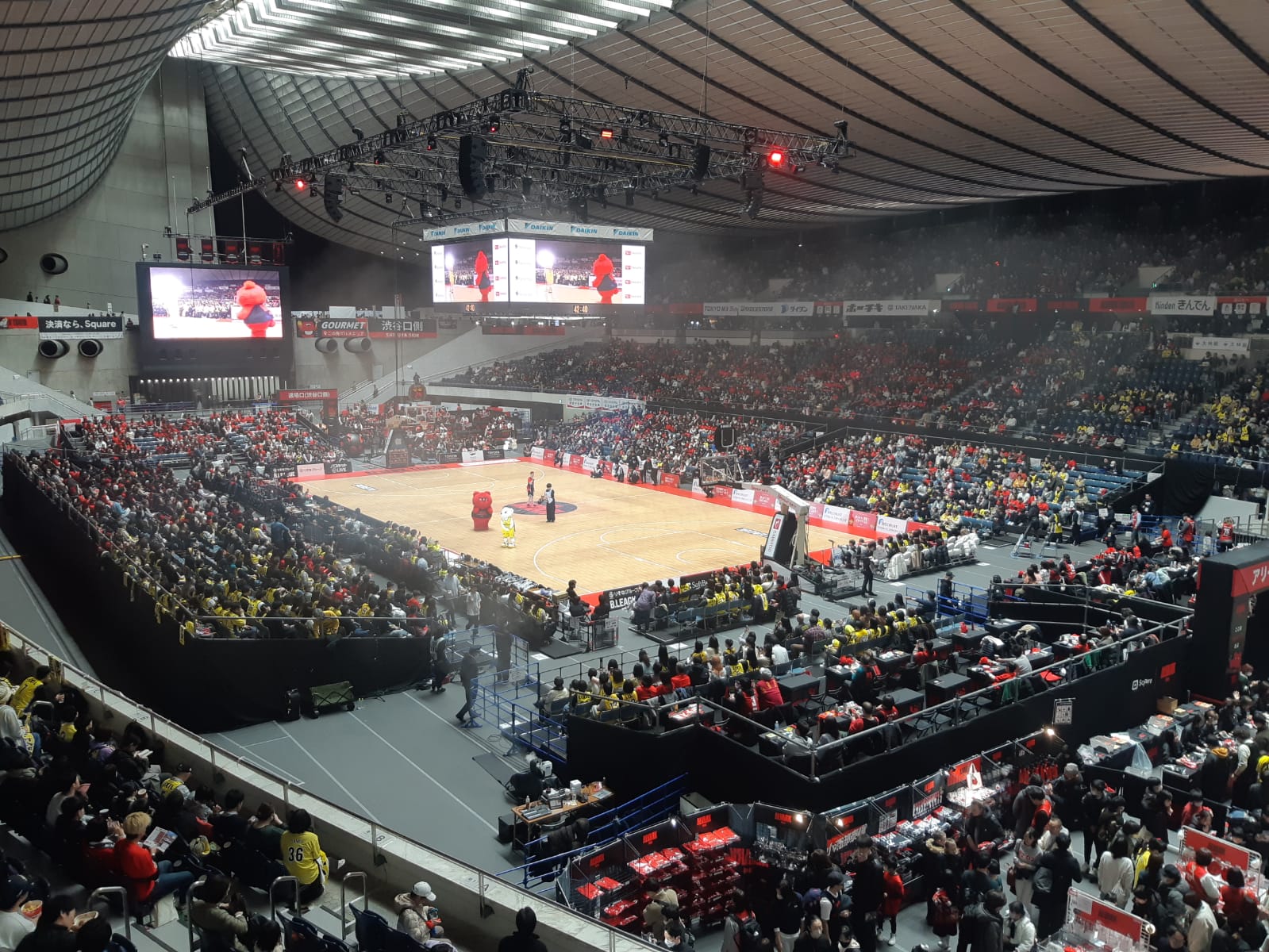
One of Tokyo Alvark’s venues.
Kyoto forced their away game into overtime, but lost in the finals as Kai Toews hit a game-winning jumper. Rana talked about how it’s about preparation and how “the names on the front of the uniform don’t matter.” It might seem like a trite sports saying, but tricking an entire team into believing they can win and not letting doubt creep in is – as another common saying goes – easy to say but hard to do.
And more impressively, Rana has never let his circumstances dictate his high standards. He played a crucial role in building one of the most storied high school basketball programs in a shoebox gymnasium at Eastern Commerce. He turned a commuter university not known for basketball (or sports) into a competitive one, even recruiting a seven-footer away from The University of Connecticut to then-Ryerson. He really started at the bottom of the coaching pyramid – first coaching in Toronto’s high school trenches at C W Jefferys – and built winning cultures anywhere and everywhere. (Well, maybe not in Sacramento.)
And he’s cultivated strong relationships every step of the way. His name is uttered with utmost reverence in Toronto basketball circles. He helped a young Junior Cadougan get through his trauma, encouraging him to stay in the US to chase his NCAA hoop dreams (he later went to Marquette). He brought Fil-Can legend Matthew Wright to Kyoto to fill its Asian import spot and brought along U Sports graduates T.J. Lall and Zack Moore.
He reached out to current CEBL head coach for the Montreal Alliance Jermaine Small in his second season.
“We go a long way back. He actually coached me in high school, and I started my coaching career with him at Ryerson,” Small said. “He approached me and asked me what I was doing – if I wanted to take an adventure and I was like ‘Yeah, I’m all for it.’”
Rana encouraged current CEBL Scarborough Shooting Star guard Manny Diressa to come back home to then-Ryerson after the NCAA route wasn’t working out for him.
Diressa isn’t surprised by his ability to transplant winning culture across continents.
“When it comes to him being able to change a program, his standards never wavered,” said Diressa. “He was always thinking of ways to improve the program, like he’s not going to let things slide. He always made sure people were being held to the highest standards.”
“The way he was able to see the future while also being super present where he was at” made a lasting impression on Diressa. “You could tell he was ambitious and someone who was really trying to make his mark on basketball. … Even though he might have had bigger aspirations in the future, he was giving his best to that program and doing his best where he was at,” recalled Diressa.
What Rana did at then-Ryerson, he replicated in Kyoto, but context matters here, too. When he set foot on Japan’s old capital known for its temples and ancient architecture, the B. League was already rapidly evolving.
The league’s Asian import quota and attractive salaries recruited Filipino players away from the PBA, and then signed some notable Australians and Brazilians. Last season, the Chiba Jets signed native hero Yuta Watanabe and former Raptors assistant coach Trevor Gleeson. Gordi Herbert had initially signed, but the deal fell apart. This off-season, Jahlil Okafor, Nassir Little and former Raptor Stanley Johnson signed to Japan.
Most importantly, growth has happened with a sound business objective in mind – all roads lead to the creation of a new top division called B. Premier, which will launch in the 2026-27 season. It will eliminate its system of promotion or relegation, and membership into the top division will be based on two key criteria: a minimum average attendance of 4,000 fans in an arena with a minimum capacity of 5,000, and annual team revenue of nearly $7.7 million USD.
Rana and the B. League are similar in many ways. The league spent a long time preparing and now expects to compete with the very best. B. Premier expects to rival EuroLeague and send five players to the NBA by 2030. Ten years ago, Japan’s pro basketball scene was in complete dysfunction.
Kyoto was inducted into B. Premier while Rana coached there last season. Their current arena became too small for Hannaryz fandom, and they will be moving into a bigger, better and shinier arena.
Kyoto’s new head coach Tsutomu Isa will be stepping into a franchise who’s standards have been set by Rana. It will expect to win, it will expect to slay the heads of Japanese basketball Goliaths.
Jordan may have lost their last game, but expect them to compete with the utter conviction that they can beat anybody at FIBA Asia Cup. Wherever Rana is in the world, he always finds a way to make others believe they can win.