
Even though the timeline feels rushed, the Tempo aren’t going in blind
The Toronto Tempo are about to embark on a year of “firsts.”
The first WNBA team in Canada. The first team outside of the United States. The first time Canadian women’s hoops players can play in Canada and get paid.
And with the outline for the April 3 expansion draft released, the Tempo are set to embark on some new territory as soon as next week. However, there’s another franchise from recent history who’s sort of been there that they can look to for advice and examples.
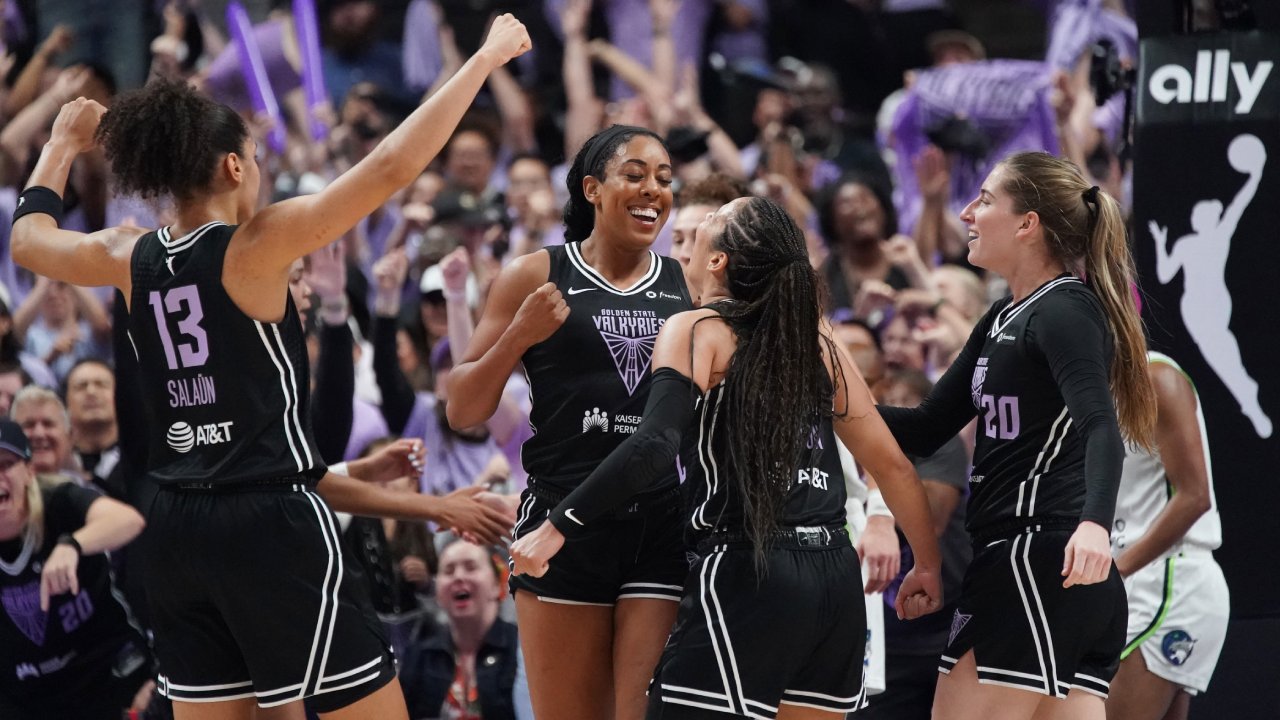
The Golden State Valkyries began building their first-ever roster in December 2024 through an expansion draft. They also had similar rules restricting the number of free agents they could snag. And just like the Tempo, they had to navigate protected player lists.
With those early decisions — and throughout the roster decisions the newest franchise made during the season — the Valkyries found success. Golden State fought its way to a historic 23-21 regular season record — the best-ever by an expansion team in their inaugural season. From there, they went on to become the only expansion team to make playoffs in its first year.
Although they were booted in the first round, the Valkyries proved their blueprint for constructing a strong starting roster was a solid one. There’s much the Tempo can and should glean from the newbies that came so recently before them.
Toronto finds itself in a slightly more nuanced situation compared to Valkyries with the number of free agents available, the increased salary cap, the rules around core players and super max contracts, and with a second team — the Portland Fire — drafting alongside them. (Raptors Republic’s Ian Finlayson explains it all here!)
Yet, there is still so much we can learn from that Golden State team and their first run at roster construction. Here’s a breakdown of who they drafted from where, and why it worked.
Give a young player their chance at stardom
Let’s start with the player fans were most excited to see join Golden State: Kate Martin.
Ever since the Las Vegas Aces surprised her — and most people — with selecting her with their second-round pick in the 2024 draft, she became a top rookie favourite.
Hailing from Iowa where she was best known for converting on Caitlin Clark’s assists, she became the only player on a rookie contract to make the Aces roster in 2024.
From there, top Aces players like A’ja Wilson and Kelsey Plum took Martin under their wings as they taught her about the big leagues. She’s an incredible role player, who knows how to execute her job well and support the stars playing alongside her, but after joining the Valkyries she successfully took her game to the next level as she stepped into a key player role.
The Tempo can look to take a similar approach at their draft — young talents who haven’t been given a full plate yet could be worthwhile expansion draft gambles.
Don’t shy away from OR get attached to international talent
Overall, the Valkyries selected seven international players in the draft, some they keep the rights too even now but have yet to see the court, some who they released before the first game, others who stayed for a while before moving on, and still others who remain to this day.
One example is Julie Vanloo who the Valkyries selected with their last pick from the Washington Mystics. Vanloo was a 31-year-old veteran who is heavily committed to playing with the Belgian national team and set for her second season. She was a good choice at the time, but after international responsibilities forced her to miss a few games in Golden State the team released her in the middle of the season. The lesson here for Toronto is to not get attached to all players they snag in the draft. There are many international talents teams might not protect because of their instability with regards to the team, this doesn’t mean the Tempo shouldn’t go after them, but they should keep it mind it may not be a partnership that lasts.
María Conde from the Chicago Sky was another international player pick. She’s a 27-year-old rookie, who was drafted in 2019, and is yet to sign a WNBA contract. Most of her focus in recent summers has been on representing Spain internationally. She did not appear in any games last year, but the Valkyries retain her player rights.
Just because you CAN pick, doesn’t mean you MUST
The Valkyries were eligible to pick 12 players, they left with only 11.
When presented with the chance to select a player from the Seattle Storm, the Golden State Valkyries decided there was no one available worth using a roster spot on. Instead of making a selection, they chose to pass.
Given how the expansion draft was situated in the WNBA calendar — and this is true for this year too — it made sense to only take players who would contribute well to team strategy because there would still be other opportunities to add players. After the expansion draft comes the opening of free agency, and although it was a bit more spacious in 2025, the same opportunities exist now in 2026. With over 80 per cent of the league and all but two veteran players in some form of free agency (restricted/unrestricted/reserved /suspended-retired) there are even more options for the Tempo to pursue and attract this year.
On top of that, Canada’s team will have a chance to add at least three new players at the entry draft on April 13.