It was just under a year ago that I was sitting on my couch, doom-scrolling while my wife and her mom watched White Chicks, when the most surprising trade in NBA history went down.
As I received the X notification from ESPN’s Shams Charania that Luka Doncic had been traded for Anthony Davis, my face went paler than Marlon Wayans in 2004 with movie makeup on.
What do you mean, Doncic is now a Laker and Davis is now a Maverick? Why? How? WHO is Nico Harrison?!
I’d then spent the next — way too many, I lost count — hours not doom-scrolling, but furiously refreshing my social media pages as I (and many others) tried to make sense of the deal. The fit, the motivations and the outlook.
Yet, more than 365 days later, there’s only one thought from the initial reactions that remains with me.
The morning after, Sportsnet’s Michael Grange penned an insightful piece — rightfully recognized as the third-place winner for Column of the Year by the Pro Basketball Writers’ Association — trying to answer all our questions.
And his musings kept circling back to one point: just follow the money.
For how mind-boggling the deal seemed from an on-court or team-building perspective, the move was sparked by the idea of having to commit $345 million to the Slovenian Superstar or nearly $70 million per year over five seasons.
Say what you want about billionaires and basketball decisions, but just about anything starts to make sense when folks are told they can avoid spending that kind of money. Especially a new ownership group that had few ties to Doncic’s upbringing with the franchise.
“We’re going to be paying players $80 million a year soon,” an anonymous executive said. “What do you do when they play a season or two and say ‘Thanks, I’m good now?’ The contracts are guaranteed … this system is broken.”
That point continues to stick with me because following the money keeps providing answers to trades even a year later.
When the Atlanta Hawks shipped off a four-time all-star in Trae Young to the Washington Wizards last month, the return of CJ McCollum, Corey Kispert and ZERO draft capital felt like quite the under-sell.
But it became evident rather quickly that what the Hawks front office valued most was financial flexibility — even more than a package of picks — heading into the summer, which McCollum’s expiring salary provided.
It was also why Atlanta then traded Vit Krejci — a 42 per cent 3-point shooter with a reasonable AAV of $2.5 million through 2028 — to the Portland Trail Blazers for Duop Reath, who won’t even suit up for the Hawks this season after undergoing foot surgery a week ago. To general manager Onsi Saleh, the third-year centre being in the final year of his rookie deal before restricted free agency mattered more than his availability, even for a Hawks team currently on pace to make the Play-In.
All the while, the draft has always been a crapshoot, even at its best. And the current CBA penalizes overspending more than the league ever has. So, with two of the most common methods of team-building increasing in difficulty by the day, franchises are instead pursuing the financial flexibility route to earnestly chase proven stars via trade or free agency.
On Tuesday, a bevy of deals went down and, like clockwork, following the money provided clarity.
Take the three-team deal that netted the Chicago Bulls Jaden Ivey and Mike Conley Jr., the Detroit Pistons Kevin Huerter and Dario Saric, but left the Minnesota Timberwolves without a returning player and came at the cost of a first-round pick swap.
Offloading Conley’s $10.7 million expiring salary was that important to Minnesota since it dropped its luxury tax bill by more than $20 million and dropped the team’s cap hit below the first apron. A move that could prove mighty consequential if their reported pursuit of Giannis Antetokounmpo ends up successful.
And there’s even a chance the Timberwolves could welcome back Conley to Minnesota if he’s bought out, after subsequently being dealt by the Bulls to the Charlotte Hornets, but this time at a much more cost-effective price tag.
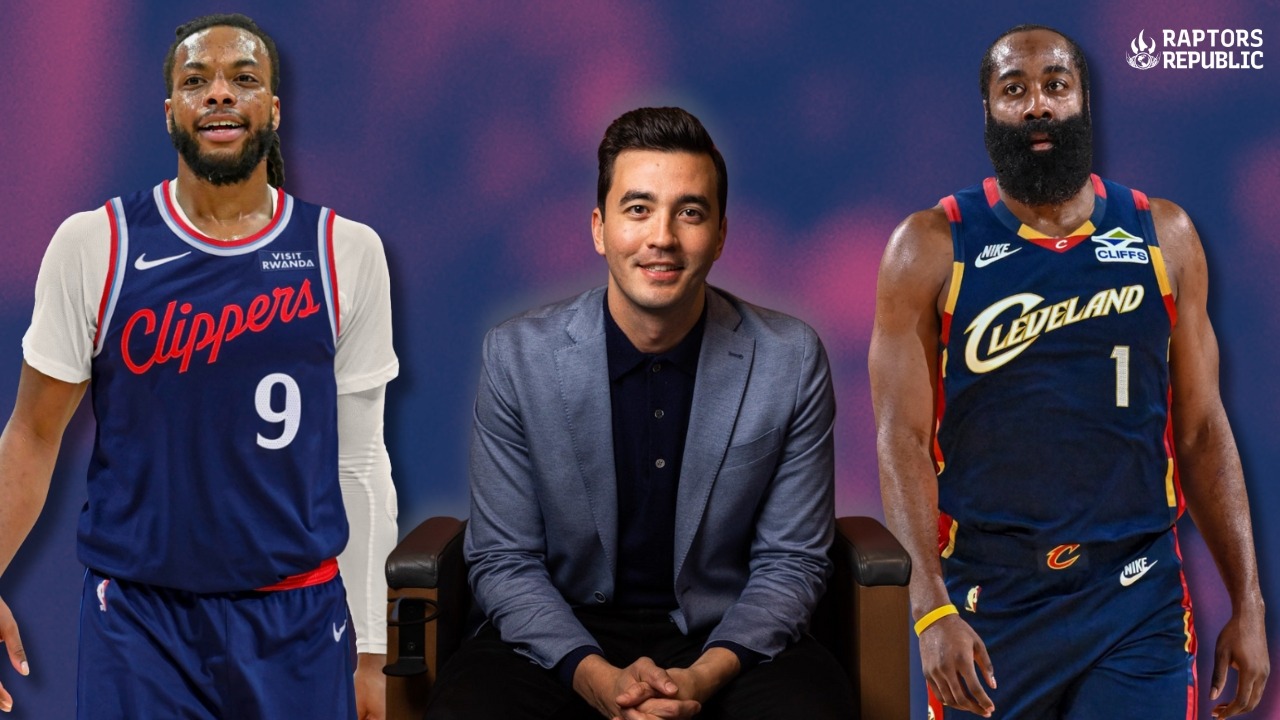
Meanwhile, there was the Cleveland Cavaliers, who entered Tuesday projected to have a top-five salary in each of the next three seasons. That’s no longer the case, and the cost-saving effort actually started even before they acquired James Harden from the Los Angeles Clippers for Darius Garland.
Earlier in the week, the Cavs sent De’Andre Hunter to the Sacramento Kings for Dennis Schroder and Keon Ellis. A two-for-one that plugs some holes for a playoff team in exchange for an under-performing wing isn’t bad business, but even more so when the $6.9 million in actual salary savings amounts to shedding approximately $40 million in luxury tax payments — very important for the NBA’s lone franchise operating above the second apron.
So, while there were definitely basketball considerations that went into swapping Harden and Garland — the vet’s consistent availability and the younger guard’s lackthereof — it’s hard not to acknowledge the financial ramifications as equal, if not greater, motivations for the deal.
The Cavaliers get a player who can take the court for them right away, but also have an exit ramp available sooner should things not pan out. Harden is owed $39.2 million this season — nearly identical to Garland — and $42.3 million next year through a player option, but only $13.3 million of that is guaranteed. Far easier to navigate around than the $87.1 million Garland is owed over the next two seasons, especially given his lingering toe injuries and Jekyll-and-Hyde production.
As for the Clippers, having a floor general under contract while figuring out their roster during the final couple of seasons that Kawhi Leonard is signed for is plenty valuable from their perspective. Especially given their lack of draft capital and a proverbial hammer that could drop on them at any minute following the NBA’s investigation into the franchise’s alleged cap circumvention.
And oh yeah, how about Davis, you know, the player the Mavericks shipped Doncic away for? Well, he was just traded to the Washington Wizards primarily for salary filler and a handful of picks. Not exactly a king’s ransom.
The Mavs were willing to move on from Davis — despite him being the centre-piece return they gave away the franchise’s prodigal son for — in part because keeping the oft-injured big meant having to pay him. Davis is owed over $54 million in each of the next two seasons and holds a $62.7 million player option for 2027-28 and will probably be eyeing an extension somewhere along the way if agent Rich Paul has any say in the matter.
Instead, Dallas now drops not only below both aprons but also below the luxury tax line this season and has only $150 million in guaranteed salary next year. Plenty of room to take on contracts and acquire picks for their troubles as they go all-in on the Cooper Flagg era.
So, what does any of this mean for the Toronto Raptors?
Well, let’s follow the money.
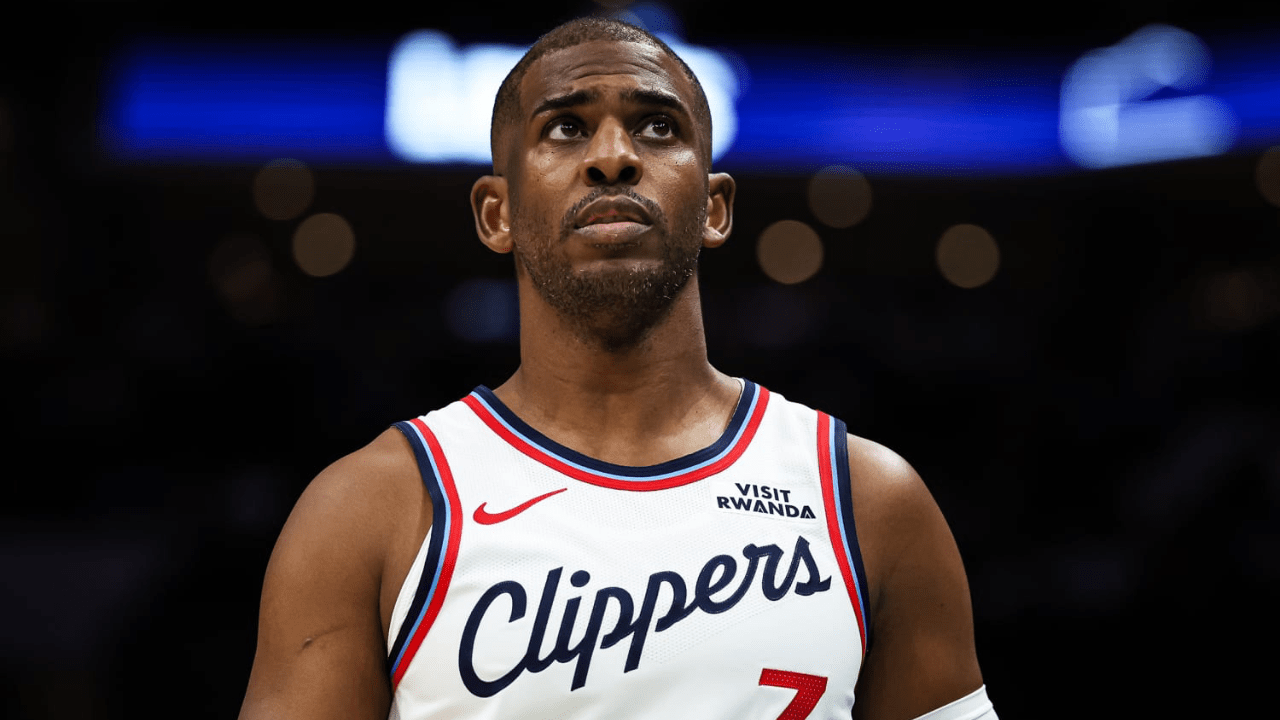
The Raptors were just under $1 million over the luxury tax line and shedding that salary was priority No. 1, as reported by Grange on Tuesday. Which then swiftly came to fruition minutes after I originally published this piece, when Ochai Agbaji was traded to the Brooklyn Nets in a three-team deal that landed Chris Paul — and his $2.3 million salary — in Toronto.
Getting below the tax by dumping Agbaji to the Nets came at the cost of a 2032 second-round pick and cash. As for Paul, the future Hall of Fame point guard doesn’t appear destined to stick around, as the Raptors won’t require Paul to report and could re-route him before the deadline.
Not exciting, but fair, and the type of move I previously wrote about that the Raptors would likely make when outlining the value in pursuing patience over potential.
Part of that focus is because of how limited the Raptors are in movable assets with real value. The closest they have in expiring salary to offer other teams was a career-worst Agbaji (RFA), who’s now gone, and RJ Barrett, who won’t be in the final year of his deal till next season.
Outside of that, Immanuel Quickley’s $32.5 million AAV is viewed as one of the more negative-value deals across the NBA, while Jakob Poeltl’s contract holds plus-value (by advanced metric models) but is complicated given his lingering health concerns.
Which makes moving either player only somewhat likely if the Raptors are attaching picks to convince teams to swallow that long-term money.
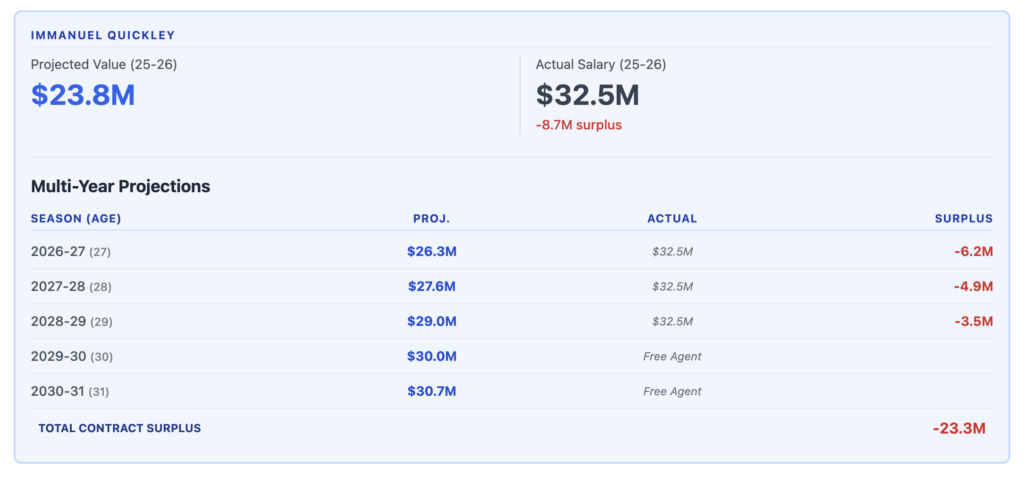
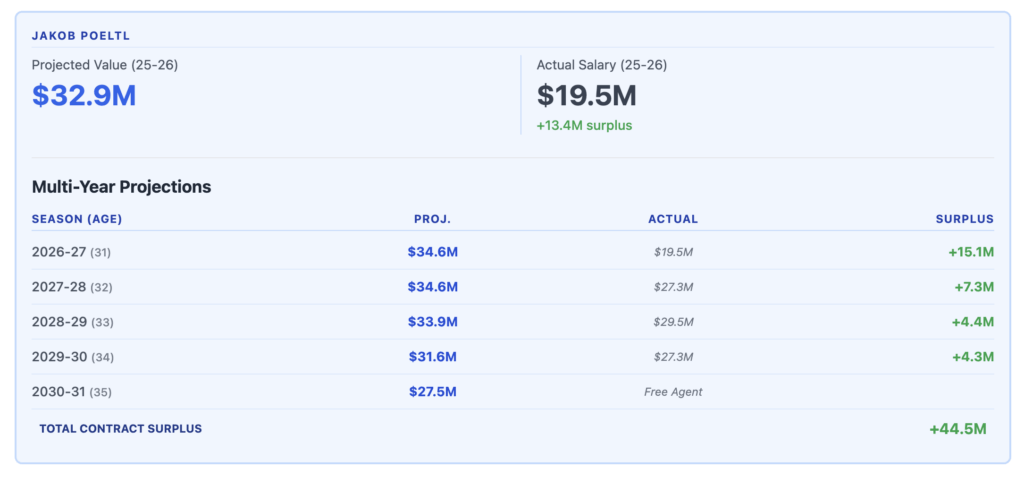
And for a Raptors team currently paying just Scottie Barnes and Brandon Ingram a little under 50 per cent of the salary cap, and over 70 per cent if you include their next-highest paid player in Quickley, dishing away future rookie-level contracts that could bolster the roster would be quite the gamble.
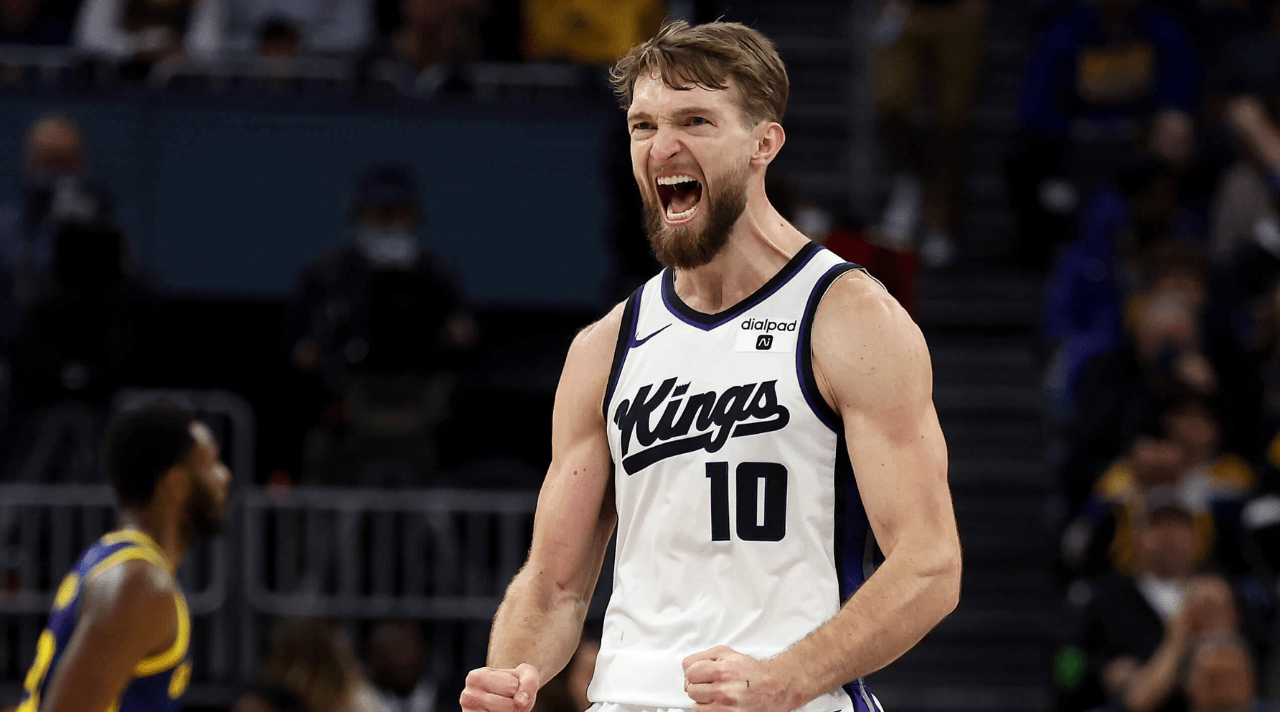
Why it made sense that NBA insider Michael Scotto reported on Wednesday that trade talks between the Kings and Raptors around centre Domantas Sabonis have paused. Toronto is seemingly concerned about how much first-round draft pick compensation it would take to re-route Poeltl to a third team (say, the Memphis Grizzlies after they just shipped off Jaren Jackson Jr.?).
By all accounts, Raptors GM Bobby Webster has attempted to get in on the wheeling-and-dealing, even actively pursuing Davis before the Wizards swooped in, per ESPN’s Tim MacMahon on Tuesday.
Toronto has clear needs to address, whether that’s the lack of size and centre depth with Poeltl hindered or its dreadful lack of shooting talent, but the pursuit for upgrades appears easier said than done. There are plenty of basketball reasons for the Raptors to get busy before time expires, but with few expiring salaries, moveable contracts and picks — that truthfully mean more to them than their opponents — to offer, it’s hard to see many paths forward.
Either way, when the trade deadline comes and goes at 3 p.m. ET on Thursday, we’ll know for sure what exactly the Raptors got done (or didn’t). And if you’re left feeling like you’ve got more questions than answers, simply do what I’ll do. Follow the money.